Books
The Only Thing More Beautiful Than Halle Berry is the Love of a Brother
Published 2026
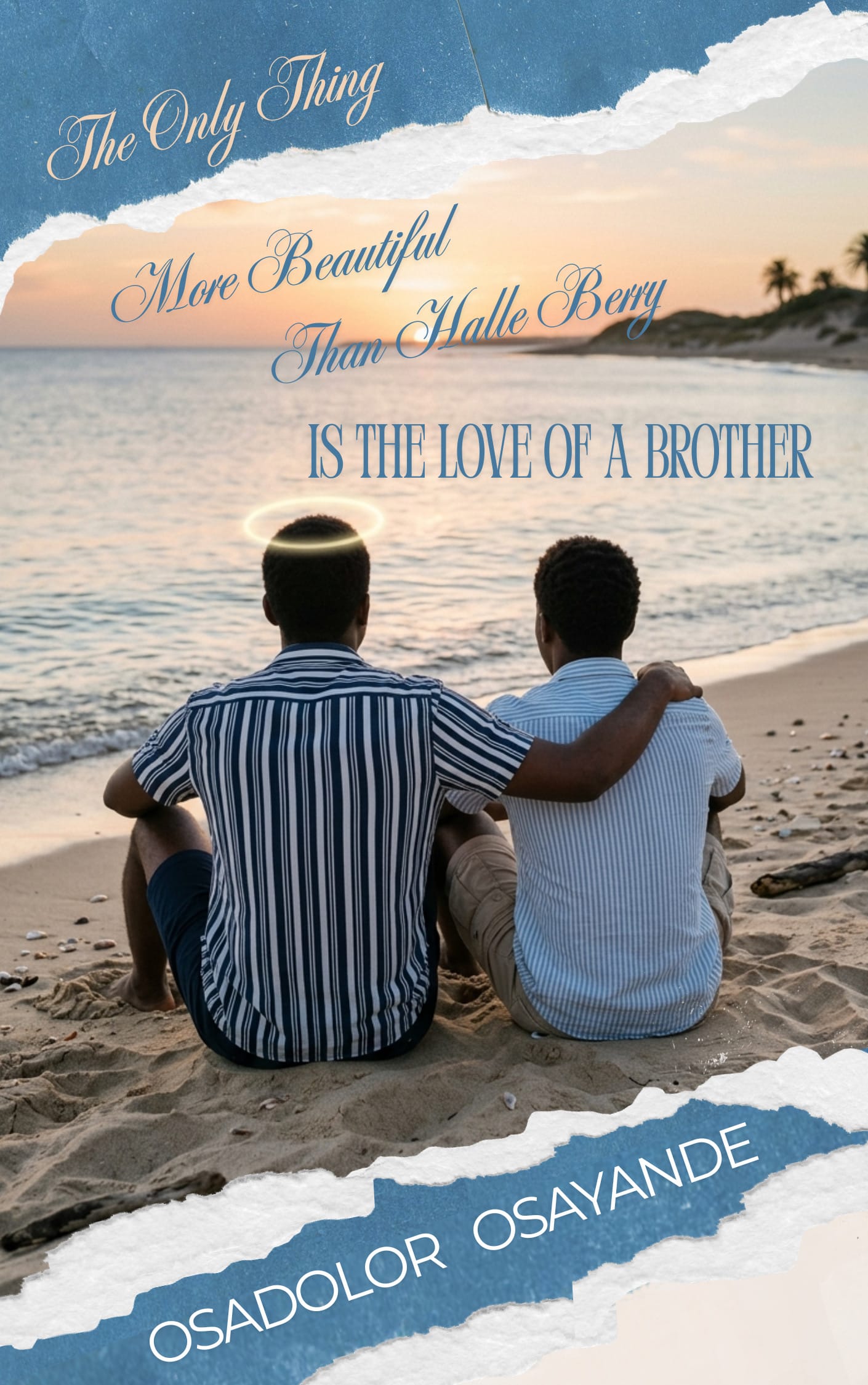
In a world where stories of devotion are so often reserved for lovers and soulmates, The Only Thing More Beautiful Than Halle Berry is the Love of a Brother dares to celebrate a devotion that often goes thankless: the sacred bond between brothers.
When his older brother dies by suicide, a younger brother is left wandering through the wreckage of grief, memory, and unanswered questions. But death is not the end of love. It becomes its haunting. His brother’s voice lingers in ordinary places. In old jokes. In shadows. In dreams that feel more real than waking life. What follows is not simply mourning, but a relentless search—for understanding, for forgiveness, and for the impossible hope that love might reach beyond the grave.
Tender, devastating, and deeply intimate, this book explores brotherly love in its purest form. Fierce enough to survive silence. Gentle enough to survive demise.
The Only Thing More Beautiful Than Halle Berry is the Love of a Brother is a heartfelt meditation on love, family, diaspora, masculinity, memory, and the unbearable beauty of being truly known by someone who shared your blood, your childhood, and your soul.
Excerpts from T.O.T.M.B.T.H.B.I.T.L.O.A.B.
1. It’s so easy to forget that an old woman was once a suckling at her mother’s breasts. (Ebikere Ogbebor)
Long before diabetes strangled papa’s neck and made him breathe his last. Long before mama decided we had to relocate to the UK because papa’s elder brother had placed a cobra on her lap—become my second wife and I will give you your share of your late husband’s inheritance. Long before Aturi retreated from us like a finger retreats from fire. Long before the police called to tell us that a deep grave had been dug in our hearts forever. Long before our lives became a sunrise of bombs and a sunset of heartbreaks. I promise you, our lives were just as beautiful as a million Halle Berrys sashaying out of the ocean in Die Another Day.
2. An old woman is always uneasy when dry bones are mentioned in a proverb. (Chinua Achebe)
We arrived in the UK slightly before 🎵We Are the World🎵 was turned into a bouquet of flowers for the Haitians, and as though our lives had sprinted before our eyes like a briskly read haiku, fifteen years had already passed since papa died. You would imagine that we had healed, right? But, no, we were still three deep wounds searching for stitches. And on one of the Christmases—the one when social media bled with the news of how four boys had died after falling through ice into a frozen lake in Solihull—Aturi called to say he was not coming home. Mama asked why and his gunshot of a reply was that he just didn’t feel like coming! So, for the rest of the evening, there was no difference between mama’s face and a dustpan filled with broken glass. I decided to intervene by pulling out the baby-brother-and-best-friend card, called Aturi to ask what the matter really was. When he still wouldn’t say, I told him I was hopping on the next train from Leeds to Manchester to see my darling brother. I massaged the darling into brother like one massages eucalyptus balm into tense muscles. Even so, I was hardly a thumb trying to push the earth. Aturi reached for the ace in his arsenal, pulled out the I-am-your-elder-brother-so-do-not-disobey-me card and warned me not to try it. I persisted, softly, and he finally admitted that he had a close dissertation submission deadline and needed the amount of focus it takes for a starving cheetah to catch a gazelle. Well, I conceded. But deep down, I knew I could smell the footsteps of a Peshtigo fire in Aturi’s voice. He said I love you before ending the call. The kind of I love you one heard beside hospital beds.
3. Dreams soon assume substance. (Buchi Emecheta)
That night, I had a nightmare that fledged out as chaotically as the sprint of a recently beheaded chicken. I dreamt that I was traipsing along the shores of a beach, and each time the waves receded, they left a shoal of ashes. As soon as I tried to touch the ashes, they morphed into a rusty nail that punctured my thumb. Scarcely had I begun groaning about the pain when, suddenly, I heard mama screaming behind me. I turned around and there she was, wearing a torn dress, running towards me, screaming as if she were the rumble of an endless thunder trying to outdo the rumble of an endless earthquake. Then I woke up. Half-annoyed, half-shaken. Half-annoyed because that’s what nightmares are, annoying. Half-shaken because I realised that mama was screaming in real life, and her scream was really just a prop my mind had harnessed to turn a nightmare into a homespun movie. Well, jumping from my bed, I followed mama’s voice like a moth follows light. When I found mama, she was sat on her bedroom floor, palming her knees and mouth, alternately. For a sliver of a second, I wanted to run back to my bed, and from my bed into my nightmare, because my nightmare felt safer than being awake. And you know why? The last time I saw mama scream like this, it was exactly fifteen years ago.
4. Our language has no translation for suicide. (Theresa Lola)
Mama kept screaming and weeping as if she were paying her taxes to the River Niger. Her body rattled the same way the earth must have rattled minutes before the Valdivian earthquake. I crouched to hold mama’s hands, and when she finally managed to speak, I stared at her as if a better option than speaking would have been to push me from the top of Mt. Kilimanjaro and watch me splatter into a thousand pieces of shock. The police called to say that Aturi’s body was found lifeless in his studio apartment, mama said. Now, believe me when I say that mama’s words tore me open like a blade tearing flesh without the mercy of anesthetic. And her words kept shapeshifting in my head until I felt dizzy: Aturi’s body. My brother’s body. My elder brother’s body. The body of the human being I adored the most. Had been found lifeless in his studio apartment. A knife, buried in his stomach! Then I clasped my mouth and unclasped it. I sat beside mama and shifted away from her. I laughed and started sobbing. Confusion and pain took off their shoes, dusted their feet at the mat in front of my heart, and knocked. And even when I tried to keep the door shut, the two of them grabbed a crowbar and barged right in.
5. We do not know how we will grieve until we grieve. (Chimamanda Ngozi Adichie)
We chartered a taxi from Leeds to the Wypenhave Hospital in Manchester—you don’t think about affordable costs when your heart is dissolving like a candle carrying the fire of a sun instead of a matchstick. And because we were grieving, the journey was a teardrop stretched into an ocean. Our sobs, a warfare between questions. Is the loss of a brother greater than the loss of a father? threw a grenade at is the loss of a son greater than the loss of a husband?
Throughout the journey, the taxi driver gave us gifts of gold—silence, solemn gazes, speed. But when we got to the hospital’s morgue, when we stared at Aturi’s body, I am not sure if Aturi’s body stared back at us like a lie-coated truth or a truth-coated lie. What I can say is the warfare between the questions intensified, so that, if I allowed you a ladder into my head you would shriek at the way how does one bribe death? threw a grenade at how does one bribe life?
And because, try as I might, it was impossible to stop the warfare between the questions, I collapsed on my knees beside Aturi’s body.
6. Lord, even the dogs eat from the crumbs that fall from the master’s table. (The Canaanite Woman)
I knelt before Aturi’s body and my palms became a beggar’s plate. I raised a beggar’s plate to the silence of his heart. I raised a beggar’s plate to the congealed blood in his veins. I raised a beggar’s plate to the lifelessness of his brain. I raised a beggar’s plate to the finality of his shut eyelids. I raised a beggar’s plate to the cruelty of the wound in his stomach. I raised a beggar’s plate to the stillness of his chest. I raised a beggar’s plate to his unmoving arms. I raised a beggar’s plate to the snobbery of his eardrums. I raised a beggar’s plate to the motionlessness of his lungs. I raised a beggar’s plate to the coldness of his thighs. I raised a beggar’s plate to the plaintiveness of the sheet covering his body. I raised a beggar’s plate to my own tears. I raised a beggar’s plate to the raggedness of my sobbing. I raised a beggar’s plate to the anguish of my sorrow. I raised a beggar’s plate to the sympathy of the nurses. I raised a beggar’s plate to the expertise of the doctor. I raised a beggar’s plate to mama weeping beside me. I raised a beggar’s plate to the God who gave Lazarus back to Mary. I raised a beggar’s plate to the asphyxiation of the reality that Aturi, my brother, was no more.
Forked Accents
Published 2025
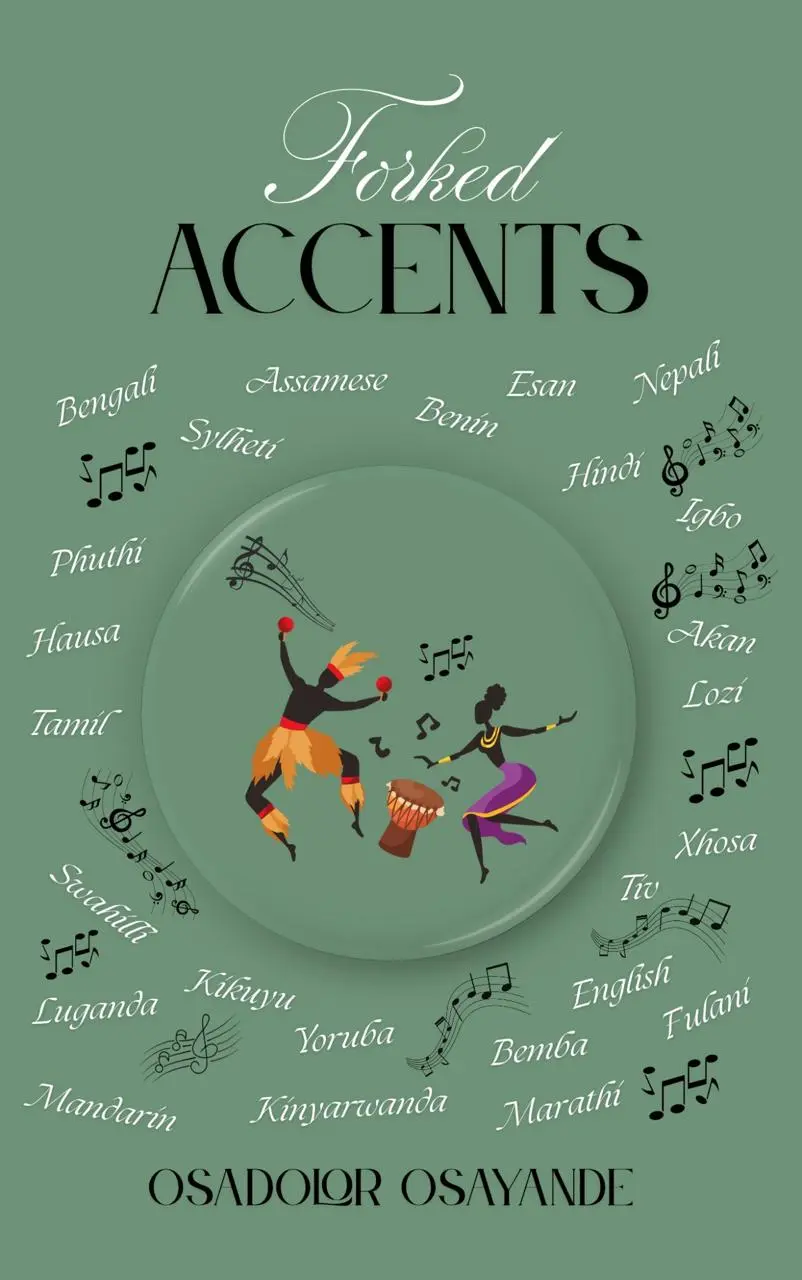
A bold and innovative collection that examines language, identity, and belonging in an increasingly connected world. Through vivid imagery and linguistic playfulness, this work explores the complexities of cultural identity, the immigrant experience, and the ways in which our accents carry the stories of our origins. The poems celebrate the beauty of linguistic diversity while acknowledging the challenges of existing between cultures.
Excerpts from Forked Accents
How else would you know I am Nigerian if you never catch me praying?
The ocean regurgitated me in the obodo- oyinbo, and I gulped every verse in Psalm 135. When the officer returned my passport, she shook her head as if I did not know that I had just become a sceptre contorted into a sickle, so I gulped a glass of Psalm 91. At King’s Cross, I learnt from the beehive that London was a lot like King Solomon, so I downed a glass of Psalm 25 because I did not want to become Solomon’s youngest concubine whose turn never reached to taste of the king’s gonads.While on the bus, the driver delivered a sermon about how the seatbelt owned 100 % of my life, so I gulped a glass of Psalm 23. As he made his way through the surgically thin roads, as the country sights wafted into my mind, I slowly sipped a bottle of Psalm 121. No sooner had I arrived at my new home, my oyinbo home, than I drank a thousand litres of Psalm 95. That night, I fell on my bed the same way Psalm 145 falls on a tired heart.
Bandages
My grandfather did to wounds what Achebe did to words. As soon as he heard that my Bini-flavoured-English had been punctured by shame, he placed an album of tongues in a medicine bag and dove into the ocean. After the officer stamped his passport, he shook the man’s hand because a handshake is an alternative way of telling another that you are not grovelling. When he arrived at my house, he sat me down, pulled out the album of tongues from his medicine bag, and made me gaze at it for the rest of my life. There was Aunty Okonjo’s tongue and the way its Igboness made the page shimmer like sapphire. Uncle Wole’s tongue and how its Yorubaness made the page shimmer like emerald. By the time we had flipped to the page where the Igbo in Aunty Chimamanda’s tongue glistened like rubies, I did not know when a tear dropped on my thighs. Now, if you were ever fortunate to meet my grandfather, this is what he would tell you, it was not a tear that dropped on his thighs; it was a chain!
Touch
But for grace, we all touch the world the same way we have been touched. If you’ve been touched roughly, you would touch others roughly. If you’ve been touched tenderly, you would touch others tenderly. If you’ve been touched kindly, you would touch others kindly. If you’ve been touched selfishly, you would touch others selfishly. If you’ve been touched compassionately, you would touch others compassionately. If you’ve been touched cynically, you would touch others cynically. If you’ve been touched lovingly, you would touch others lovingly.
Bo-ul
Let us place a wreath on the head of every Nigerian. On Iyekepolor and Chinyere. On Folake and Adamu. Let us massage the shoulders of their accents when their tongues hurt from the betrayal that happens whenever they caramelise tr into chr, so that trouser caramelises into chrouser, trust caramelises into chrust, trim caramelises into chrim, and try caramelises into chry. Who knows, one of these days, Iyekepolor, Chinyere, Folake and Adamu, would embrace the reality of how there is no difference between their tongue and Liam’s London tongue that cannot help caramelising bottle into bo-ul even if his life depended on it!
Serendipity
Every time I open the doors of my tongue and watch Bini run into the field, holding English’s hand, completely oblivious of the battle in my tongue, my eyes mist up. I watch the two of them, two little children quarrelling in one minute and tickling each other’s ribs in the next. I watch the two lads conjure a football out of thin air, kick it into the gaps between trees—homespun goalposts. I watch as Bini teaches English goalkeeping, and I watch as English teaches Bini how to dribble. I watch English wash Bini’s foot with water when he bruises it, and I watch Bini share his lunch with English, votively. Now, the truth is, I watch them from a distance and sob, tenderly, because no matter how hard I try, their serendipitous brotherhood would always remind me that English is that adopted child whom I must learn to love as much as the biological child if I want the battle in my tongue to cease.
Reviews
"What makes Forked Accents compelling is not just its themes, but its literary craftsmanship. The author deliberately draws on African oral traditions—metaphor, repetition, rhetorical questions—not simply as style, but as a cultural affirmation"— The Vanguard
"This book is a breathtaking exploration of language, displacement, and selfhood. These poems don't just describe the immigrant experience—they embody it, with each line carrying the weight of hyphenated identities. The collection shines brightest in moments like 'My grandfather says, if you hold a chain for too long, it becomes a necklace'—where trauma transforms into heirloom. While the book could benefit from more cultural specifics, its universal themes of erasure and resilience resonate deeply"— Amazon Review
Thirty Photographs of God
Published 2024
A powerful narrative of cancer, demise, and the fragility of faith in the face of death's finality, Thirty Photographs of God grants readers an honest space to reverently confront the ageless debacle of how a good God allows his children suffer. It stretches beyond the conventionality of offering readers the famous light at the end of the tunnel but touches your heart in places where you've scarcely been touched, while guiding you graciously through the darkness of the tunnel in preparation for the light.
Excerpts from Thirty Photographs of God
The Photographs (I)
You are water, and like all water, you would depend on thirst to be loved. Year after year, you would long to hear the mention of your name, Water, when people speak of their favourite drinks. But tell me, who craves for water when there is Moet? Year after year, you would secretly envy everyone who tastes like wine until God sneaks into your misery. And because God’s throat knows how to respect thirst, God would drink of you long after his thirst has been quenched and you would finally know that even ordinariness is beautiful.
The Photographs (II)
For your sake your God, who has never flicked a finger at a fly, he would force arsenic down the throat of fear, he would handcuff sorrow and make him a lifer, he would throw hurt into a hole of molten magma, he would push sadness down a cliff, he would invite anguish for a swim in a pool full of crocodiles. Your God would come back home with a sword clothed in blood on one hand, and the head of all your worries dangling in the other hand. You would see the red drip from where the sword met with the neck of despair and for the first me in your life the only fear you would ever have would be the fear of your God. So that when he goes into the bathroom to wash the sweat of battle from his body, you would dash into the bedroom and change the white sheets into something close to liquid passion. Red.
Reviews
"Breathtaking. This book talks about God as a mother, father, brother, lover, bestfriend. But then it also talks about how God would occasionally allow your heart break, and that's the part you wouldn't see coming while reading! I would recommend this book for everyone trying to make sense of God and the concept of human suffering. It is so masterful!"— Amazon Review
"I found this collection to be such a moving exploration of faith, pain, and resilience. Each poem invites you to sit with the uncomfortable reality of loss and suffering without rushing to offer easy answers. The writing feels super raw and intimate, like Osayande isn't afraid to grapple with the difficult question of why we experience suffering, even when faith is strong. Each poem reads like a quiet moment of reflection, bringing you closer to the emotional and spiritual turmoil of facing 'no' from God. It's a quick read but leaves a lasting impact"— Amazon Review